

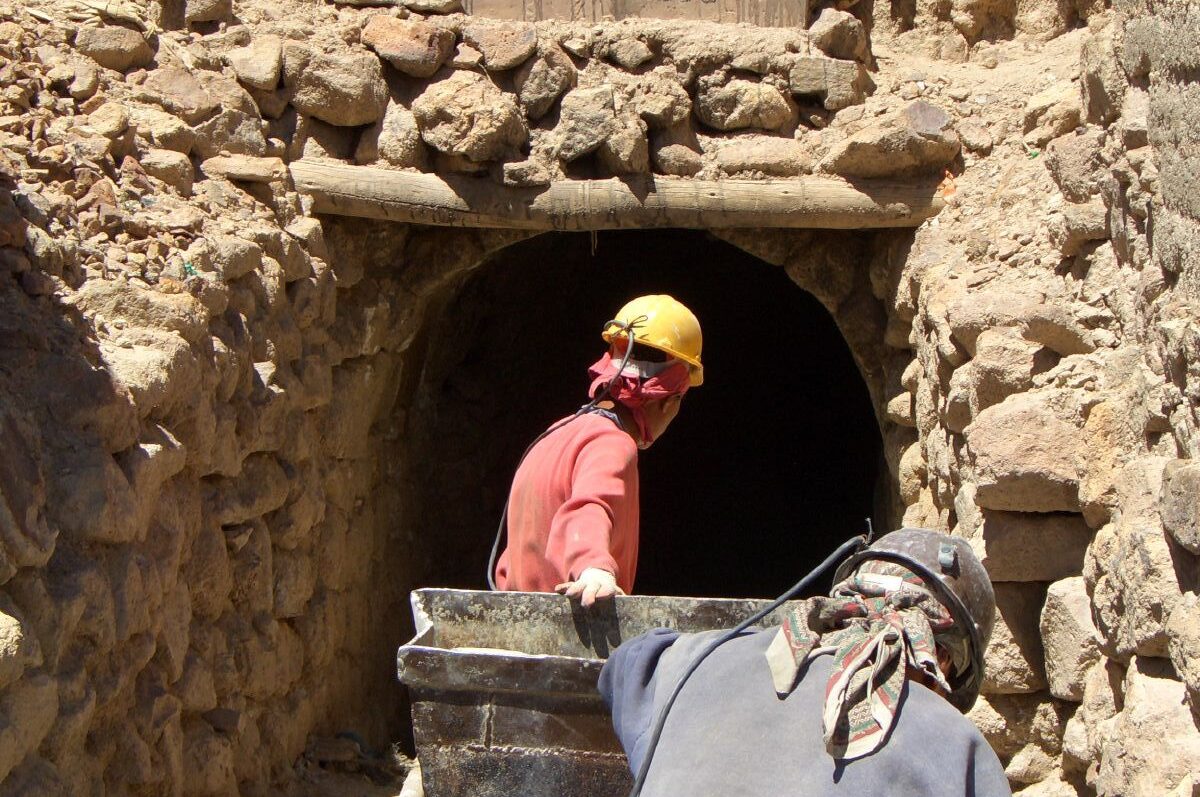
Every year, between February and March, the streets of Potosí, Bolivia, one of the world’s highest cities, come to life in a celebration of the local mining community. The men and women who work above and below ground in the nearby mines on the Cerro Rico mountain gather and march through the town together while dancing to the sounds of local folklore bands.
Women wear colourful dresses adorned with ribbons and ornaments. Men, on the other hand, keep on their worn-out, dust-soaked mining uniforms, carrying the traditional ‘El Tío’ effigies symbolising the Lord of the Underworld, where these miners spend most of their days.
When the music quiets down, and the streets go empty and silent again, after the tourists depart and the miners return to their homes, the next working day comes, and the harsh reality resumes. The city, which used to be the engine of the Spanish Empire, fueled by silver and the blood of those who extracted it, returns to its routine.
The Golden Age of the Silver Paradise
It all started in 1545 when an indigenous Andean man, Don Diego Gualpa, discovered the richness of the earth near the Cerro Rico mountain, abundant in ore, during one of his hunting trips in the region. He then informed his Spanish masters of his findings, who soon established a mining facility there, which continues to operate today.
In less than a century, the area became an economic engine of the Spanish Empire and perhaps one of the first to instigate global trade. The discovery of silver deposits in the depths of the mountain occurred during severe precious-metal shortages in Europe, sealing the status of the newly established city of Potosí as one of Spain’s most valuable and exploited colonies.
Roughly seven decades after the first settlements in the town, Potosí became the fourth-largest city in the Christian world, housing over 160,000 people, from the indigenous population to enslaved Africans and Spanish settlers. It had an elaborate, modern infrastructure comprising palaces, leisure establishments, and significantly more modest homes of the mining workers. Twenty-two dams surrounded the city, powering 140 mills that ground silver ore, which was then processed into bars and sent to colonial mints in the Americas. The final product—silver coins—was then sold to Spain and other European countries, and its vast revenue kept feeding the Spanish national treasury and Spain’s imperial projects and wars with other European empires.
The Other, Less Shiny Side of the Coin
Unlike the Spanish settlers and their empire, the local miners could hardly taste the benefits and wealth generated by the silver veins running through the Cerro Rico mountain. According to numerous historical sources, miners were subjected to extremely harsh conditions and abuse by their masters. Each worker had to carry roughly 25–45 kg bags of silver ore from the mining tunnels to the surface, working nearly in total darkness. Pneumonia and other respiratory infections became common, and it has been estimated that roughly 8 million miners have died since the mills opened in the mid-16th century. For most people, however, the mines provided the only possible form of income. Getting enough money to put food on the table and see the light of another day, the workers went on with their lives, and so did the machinery holding them hostage while enriching others.
New Times, Same Hardships
Fast forward to the present day – the mines are still operational; however, the glory and prosperity of the city of Potosí are long gone. The majority of silver deposits have been extracted, and zinc, tin, and lead have replaced it as the main mining source. The grand villas and colonial objects have mostly turned into restaurants, hair salons, and dental offices.
However, the poor living standards of miners and locals have remained largely unchanged. People working in the mines and living in the area are still getting sick and dying of the same respiratory diseases as their ancestors, mainly due to inhaling silica and drinking contaminated water. Reportedly, the average life expectancy of a Bolivian miner is roughly 40 years, and children as young as 6 have allegedly been seen working in the mines, with the minimum working age set at 14.
When the Mountain Kills Again
The natives have called Cerro Rico “the mountain that eats men.” The residents of Potosí and other settlements located on the mountain are now facing yet another existential issue. Due to centuries of heavy mining, the ground surface in the area is starting to sink and collapse, damaging local infrastructure and the homes of dozens of families. Approximately 180 families risk their lives every day as they enter their homes. According to Mongabay, the collapsing ground is also jeopardising roughly 30,000 workers still mining in the tunnels below.
In 2014, UNESCO designated Cerro Rico and Potosí as endangered World Heritage Sites due to the devastating effects of ongoing mining in the area. Nevertheless, this statement did not deter the Bolivian authorities and mining companies from continuing their operations at Cerro Rico, an important national monument and home to thousands of people. On the contrary, many enterprises, such as the Mining Corporation of Bolivia (COMIBOL) and Manquiri, are doubling down on their operations amid a surge in global mineral prices, using modern technologies and worsening the already dismal state of some endangered areas.
In 2022, however, a Potosí court ordered COMIBOL to shut down all mine entrances and routes above 4,400 metres. In September last year, it froze the bank accounts of several prominent COMIBOL representatives and of Mining Minister Alejandro Santos Laura to prevent continued operations.
In October 2025, it was officially decided that the mountain’s summit would be supported by concrete and steel structures to preserve it better and mitigate the impacts of mining. The finalisation of this project, however, will not provide consolation for the many lives already lost, the environmental damage in the area, or the hunt for natural resources there.
Ondrej Kriz – Contributor