

International law – that phrase often summons an image of suited-up lawyers and prosecutors walking in glass buildings and speaking a language that none of us understands. That staple of 20th-century bureaucratic peacekeeping has never been too extreme in its judgments, when it comes to the recent US attack and abduction of Venezuelan dictator Nicolás Maduro, questions are raised about the moral and philosophical basis of its practical functioning.
Donald Trump’s return to the presidency signals a renewed and emboldened challenge to the authority and relevance of international law. The most recent development in the second round of Trump’s presidential saga has been the effective abduction of Venezuela’s president, Nicolás Maduro, and the takeover of Venezuela. Despite his actions constituting a clear breach of international law, it appears the president has once more bypassed international legal norms without consequence.
Morally Grey Jurisprudence
In an interview with The New York Times, Trump stated: “I don’t need international law.” His power apparently is limited only by his “own morality.” While it is easy to dismiss these comments as another one of Trump’s many absurd assertions, the implications of his actions are deeply concerning for the international legal order. The failure of international human rights bodies such as the United Nations (UN) to effectively intervene and prevent flagrant violations of international human rights law by states such as Russia and Israel in recent years calls into question whether it still functions as a legal system rather than a largely symbolic one.
As Princeton Professor Richard Falk puts it, the UN, while able to enforce laws in areas such as transport, communications, and diplomatic immunity, fails to uphold its commitment to geopolitical security and sovereignty. This allows the US president to misuse the enormous American military reserve as a tool for sudden, rapid economic growth through corporate gain, while ignoring the long-term consequences, something Falk terms “nihilistic geopolitics”.
International law relies on each country’s recognition and ratification of treaties. It appears that the issue is inherent in the system, which, by definition, enables states to disregard its viability at any time. In an interview with the BBC, UN Secretary-General António Guterres discussed the organisation’s international law. “There are those who believe the power of law should be replaced by the law of power,” the UN chief said. The legal system’s liability lies in the loopholes that allow large economic and military powers to circumvent it.

The Unprecedented as Precedent
Trump’s recent launch of the Board of Peace is a worrying example of this new reality. Although originally designed to manage the Gaza ceasefire, Trump has since announced at the Annual Meeting of the World Economic Forum in Davos that the board will be expanded beyond Gaza to tackle other global conflicts and promote peace worldwide. According to the Charter of the Board of Peace, Trump, as chairman of the board, will have extensive powers, including the ability to veto decisions and remove members, subject to some limited constraints. Trump has asserted that the board may “replace” the UN, which he has previously criticised for being dysfunctional.
Consecutive failures of international legal organisations to tackle large military powers in their affairs remove, little by little, all the barriers to previously unthinkable actions for territorial gain and political influence.
Social Perspectives on the Attacks – Happy, Sad, Conflicted
While the world leaders toy with legal frameworks and abstractions, on the other side of “international law” stand the lives of real people.
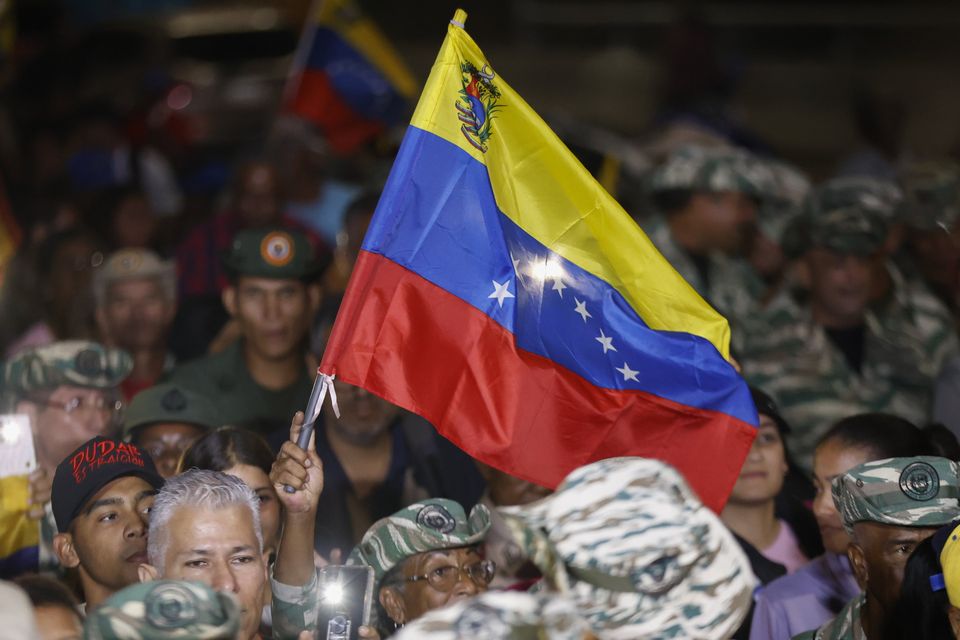
While the bodies of those killed in the night airstrikes were still being uncovered, thousands took to the streets of Caracas to celebrate the apparent end of Maduro’s regime. Some waved the stars and stripes alongside the Venezuelan flag—a country with the largest oil reserves on the planet.
The Diaspora and the Citizens
Maduro was only the tip of the iceberg, as the rest of his administration still controls the government, and his former Vice President, Delcy Rodríguez, was designated Venezuela’s interim president. At the same time, the U.S. president openly stated that the American government would, in essence, temporarily “run” the country and take control of its vast oil reserves. Any initiative by the Venezuelan people to decide the fate of their homeland seems unlikely. It is because of that lack of agency that, for many Venezuelans, the attacks did not serve as anything more than a giant stressor and cause for mental health crisis. Carlos Padron, a Venezuelan psychoanalyst, says:
“Venezuelan people are not an abstraction, not a symbol to be used for anyone’s political or narcissistic ends. We are bodies, histories, relationships. Venezuela is at a crossroad of forces much larger than us […] Let that reality be felt.”
For Caracas lawyer Elizabeth Pereira, the predominant feeling was anxiety, driven by uncertainty about both personal safety and the political situation. Indeed, here comes the moral dilemma of the stagnant international law. Does it only care about the general consensus between governments or the well-being of the citizens that those governments represent?
Despite the precarious political situation, other Venezuelans choose optimism instead of fear. Celebrations erupted in countries with a strong Venezuelan diaspora. In Madrid, approximately 3,000 people gathered in Puerta del Sol to express their support and gratitude to the US for removing Maduro from power and, in the eyes of many, liberating their country.
Nearly 8 million Venezuelans fled during Maduro’s regime to pursue better economic conditions and often escape persecution. Some of those living abroad now consider returning.
The College Tribune spoke with María Rita, a 22-year-old Psychology student at the University of Salamanca in Spain. She is of Venezuelan origin but moved along with her mother and a younger brother to Tenerife. Other family members stayed behind.
“I had a very good life — we were a financially well‑off family — and I love Venezuela, my culture, and my people. But no matter how much money you have, when there is no food or medicine, when, as a child, you learn to identify possible kidnappers, when the electricity goes out… In those cases, no matter how well‑off you might be, money does not buy peace of mind, and it also doesn’t buy food”, she remarked.
Venezuela has been subjected to sanctions and attacks by the US, and NGOs have observed countless human rights violations.
Political Consciousness vs Homesick Sentiments
Rita stayed in close contact with her grandmother and childhood friends, well aware of the oppression she had escaped. She said Maduro’s regime suppressed all opposition, like in the alleged rigging of the 2025 presidential elections and subsequent protests.
“I have hoped for change, but each time the people tried to rise up, the military responded with gunfire, murders, kidnappings, and imprisonment in torture centres…” said Rita.
The U.S. removal of Nicolás Maduro earlier this year came as a bittersweet surprise not only to Rita but to millions of Venezuelans. She explained, “Even though I don’t support Trump, I couldn’t be happier with what he has done”.
Rita’s sentiments are widely shared, which might seem surprising to the outside world. Trump has said on numerous occasions that he intends to exploit Venezuela’s resources. However, for Venezuelans who directly faced starvation, economic instability, and violence perpetrated by Maduro and his followers, the broader geopolitical implications of the U.S. capture operation remain abstract and often secondary.
As Rita put it, “It doesn’t matter to us whether he wants oil or not if that means the tyranny in the country will end.” The question remains, however, whether one form of “tyranny” can be replaced by another.
Hardly has the US used interventionism on a politically vulnerable country without enforcing some form of exploitation of its citizens or resources afterwards. Historically speaking, many countries have faced such “special military operations” from the economic giant, even under far less extremist administrations.
Trump’s intervention prolonged the political limbo of Venezuelan citizens, stuck between two authoritarian populists, both unwanted, both largely unconcerned with the fate of the Venezuelan nation. The path toward stability and potential prosperity remains long and far from over.
Ondrej Kriz – Contributor
Beatrice Drummond – Contributor