

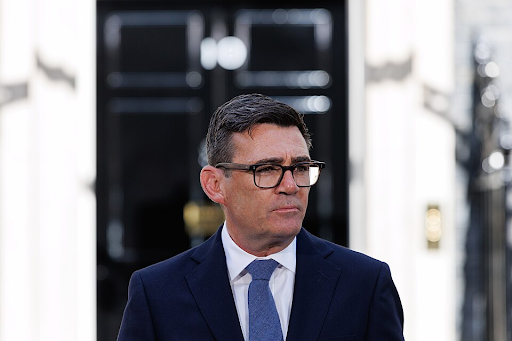
“The days of Whitehall fighting the devolution of power into the regions and nations are over, for good,” declared Andy Burnham in a June speech in Manchester. “No.10 North will be the nerve centre for a rewired Britain,” he said, to rapturous applause from Labour Party supporters.
Among the now-PM’s promises was to push power “deeper down” into all areas of the United Kingdom, including Northern Ireland. Yet, what forms Burnham’s blueprint for a less centralised Britain could also provide a framework for a future reunification of Ireland.
Burnham’s central diagnosis of British government inefficiency and inaction over the last decade is that Britain is excessively centralised. His answer, a “rewired Britain”, focuses on greater autonomy for the regions of the UK over transport, housing, skills, economic development and essential utilities.
In essence, Burnham argues that belonging to a larger political union need not mean surrendering local political autonomy to a single, centralised state. Paradoxically, despite the PM’s recent aversion to the issue of a “border poll”, this raises an intriguing, yet necessary, question across the Irish Sea.
The question of Irish reunification has been debated for over a century. The Government of Ireland Act 1920 partitioned the island, establishing Northern Ireland within the UK while the Irish Free State, later the Republic of Ireland, emerged in the south.
Northern Ireland was established with a Protestant and Unionist majority with a Catholic and Nationalist minority. Sectarian tensions eventually erupted into the 30-year period known as “The Troubles”, during which approximately 3,600 people lost their lives.
The conflict was brought to a political settlement through the 1998 Good Friday (or Belfast) Agreement. The agreement established power-sharing between unionists and nationalists, guaranteed rights and, crucially, established the principle of consent: Northern Ireland would remain part of the United Kingdom unless a majority of its people voted for reunification. It simultaneously recognised a united Ireland as a legitimate constitutional outcome, provided it was achieved through democratic consent from referendums in both Northern I reland and the Republic of Ireland.
As John Hume put it, “the last word would have to be left with the people of Ireland and not the politicians.”
Many within the Unionist community feared that the consent principle placed the future of their union with Britain under permanent question. Those fears have been reignited by the recent emergence of a Catholic plurality, which conventional political thinking associates with increased support for reunification (although demographic desiderata is far from linear).
This brings us back to Burnham’s devolution, and what it could inspire in future debates surrounding reunification. In an attempt to make reunification more palatable, a plan could be devised whereby, following a successful referendum, Northern Ireland would continue as a devolved state within Ireland, retaining a distinct political identity similar to Scotland within the United Kingdom.
There is constitutional and legal precedent for such an arrangement. Within the Irish Constitution, Bunreacht na hÉireann, Article 15 includes provisions for legislation recognising a “subordinate legislature” within the Irish state; a provision that could be applied following reunification.
The prominent Irish political scientist Brendan O’Leary refers to such a phenomenon as the “full transfer model”, whereby Northern Ireland would change hands from the UK to Ireland while retaining the rights, responsibilities and privileges endowed by the Good Friday Agreement. Subject to Irish legal recognition, the power-sharing executive could continue and Stormont (the Northern Irish parliament) would retain responsibility for local policy and legislation.
The Irish government would instead retain “excepted” powers, including foreign policy, defence and national fiscal policy. As Ireland is a member of the European Union, EU law and relevant Irish and European jurisprudence would also apply to Northern Ireland.
However, the most important consideration in any plan for reunification is the scale of institutional opportunities provided to citizens. The Irish government, at the time of a reunification referendum, would need to provide both citizens in the South and prospective citizens in Northern Ireland with a settlement that is advantageous and fair to all. Reunification cannot be achieved purely upon historical precedent, but through actively positive political action.
The problems with a devolved model are clear, most pressing among them being opposition from both nationalist and unionist communities. Nationalists may be disappointed by the lack of a fully fledged, unitary Irish state, while some unionists may fear political and cultural marginalisation in a Catholic- and nationalist-dominated Ireland. To combat this, the Irish government and subsequent administrations would need to plan for the implementation of beneficial, national services and opportunities for all citizens, such as healthcare, welfare and education.
It cannot be overstated the size of the task facing the Irish government, the Northern Irish executive and the British government on the question of reunification. Politically and culturally sensitive, it must be treated with the respect and diligence that the communities of Northern Ireland and Ireland deserve; a solution can only be achieved through peaceful and constructive intercultural dialogue.
I myself, as a Southerner, wish to see the aims of the Good Friday Agreement fulfilled, whereby the citizens of Northern Ireland, first and foremost, are provided with the opportunity to express their preference on reunification.
On this island, we are truly a shared community, one which has a common past and a common future, regardless of whether the two countries reunify. To be a common community, we do not necessarily have to inhabit the same state or preside under the same flag, but recognise the values and possibilities of a cooperative future.
It is a right of the Northern Irish people, and perhaps by extension the Southern Irish, to explore their state’s destiny. It is a Northern Irish solution to a Northern Irish question: a possibility for its citizens to determine their future, whether that be within the UK or a united Ireland.
While Burnham’s planned devolution within the UK is an inherently political solution, a devolved Northern Ireland within an Irish state must be democratically adjudicated. The future of Northern Ireland lies with its people, and their inalienable right to self-determination.
Harry O’Leary – Co-News Editor